Why I Studied Psychology and Tarot
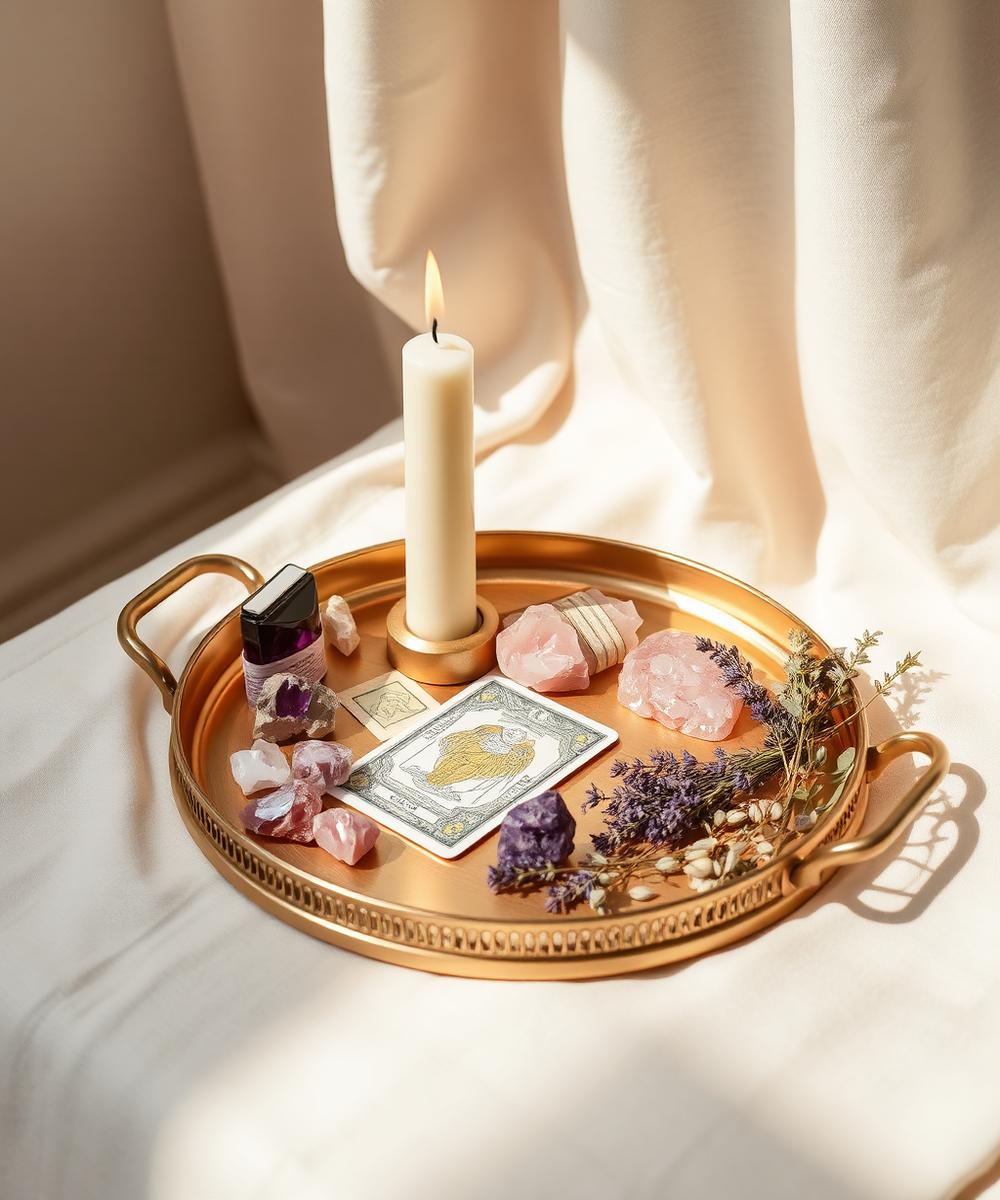
When I went to university to study psychology, I was already ten years into reading tarot. Ten years old, cards in hand, feeling something everyone around me treated as a phase. By the time I was sitting in lecture halls learning about cognition and behavior, tarot wasn't a phase anymore, it was just a part of how I'd always understood people. I remember feeling, for a long time, like I was living a kind of double life. The rigorous, evidence-based student by day, poring over research methods and citing studies. The intuitive by night, reading cards for friends and increasingly, strangers, trusting something I couldn't fully explain in academic terms.
I assumed, for a while, that eventually I'd have to pick. That the psychology degree would either quietly replace the tarot, proving it unnecessary now that I had "real" tools, or that the tarot would eventually pull me away from academia entirely, toward something less measurable and more felt. Neither happened. What happened instead surprised me.
It took me a while to realize those two things were never actually in conflict, I'd just absorbed the cultural assumption that they had to be, that rigor and intuition sit on opposite ends of some spectrum, and that taking one seriously meant dismissing the other. Psychology gave me language and structure for what I'd already been sensing intuitively for years. Attachment theory explained patterns I'd been reading in people's cards without having a name for them. The research on the reticular activating system explained, in clinical terms, something I already understood experientially about how belief shapes perception. Studying the mind academically didn't debunk what I'd been doing with tarot. It gave me a second vocabulary for the same underlying territory.
And tarot gave psychology something back that a purely academic approach alone couldn't offer me, a mirror into the parts of a person that the analytical mind is very good at talking over. You can know, cognitively, that a pattern isn't serving you, and still not feel it, still not really let it land, because the analytical mind is extremely skilled at agreeing with an idea without actually changing anything underneath it. A card on a table, landing in a way that makes you go quiet, does something a well-reasoned argument often can't. It bypasses the part of you that's used to intellectualizing your way around the truth.
I don't lead with one and hide the other anymore, and I stopped a while ago trying to make either side of this legible to people who need me to pick a lane. Both are real tools, doing different jobs. When someone needs structure, understanding why a pattern exists, what's reinforcing it, how change actually happens neurologically, I use what I learned formally. When someone needs to feel something they've been avoiding, to get past the analyzing and into the actual knowing, tarot and intuitive reading do that faster and more honestly than any framework I was taught in a classroom.
If there's a reason I built this practice the way I did, psychology-informed and unapologetically intuitive, at the same time, not as a compromise between two things but as the actual, full picture, it's because splitting them never made sense to me, even when everyone around me assumed I'd eventually have to choose. I never did. I don't think I was ever going to.
Get letters like this, gently
Weekly reflections. No noise.